LFP vs NMC Batteries – Which One is Better for Indian Roads?
The battery pack is the most expensive and critical part of an electric vehicle (EV). It decides not only the car’s range, performance, and safety, but also its resale value and total cost of ownership.
For Indian buyers, two types of lithium-ion batteries dominate the EV market today:
- LFP (Lithium Iron Phosphate)
- NMC (Nickel Manganese Cobalt)
Both have unique advantages, but which one is better suited for Indian driving conditions – hot summers, traffic jams, diverse terrains, and occasional long highway trips?
Let’s break this down in detail.
🪫The Basics of EV Batteries
All modern EVs use lithium-ion chemistry, but within this, there are sub-types.
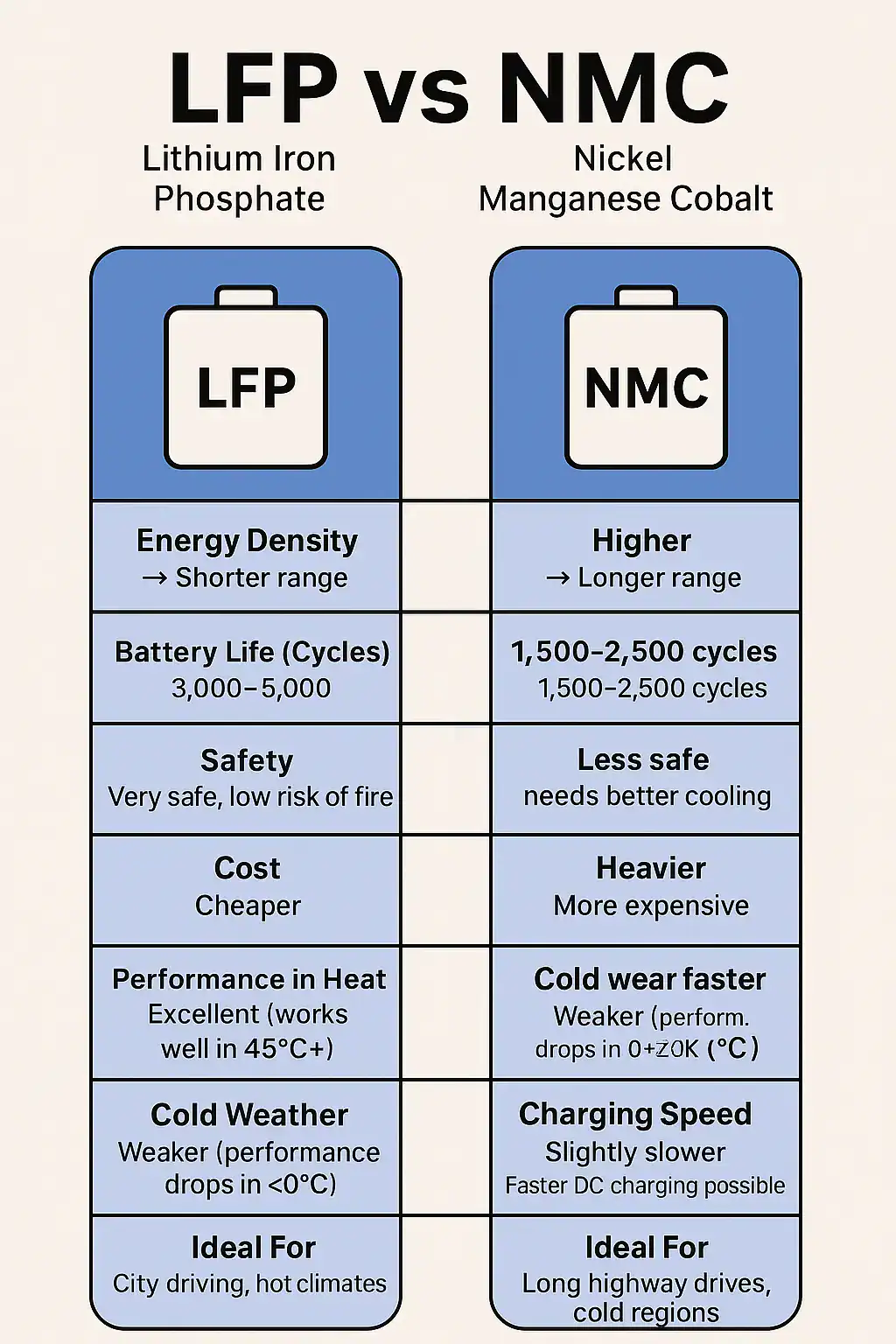
- LFP (Lithium Iron Phosphate): Stable, safe, long-lasting.
- NMC (Nickel Manganese Cobalt): Higher energy density, faster charging, but costlier and less stable.
Think of it like this:
- LFP = Diesel engine of EVs → Reliable, durable, economical.
- NMC = Petrol engine of EVs → Powerful, faster, premium.
> Technical Differences Between LFP and NMC
| Parameter | LFP Battery | NMC Battery |
|---|---|---|
| Energy Density (Wh/kg) | 120–160 | 200–260 |
| Range per kWh | 6–6.5 km | 7–8.5 km |
| Cycle Life | 3,000–5,000 (10–12 yrs) | 1,500–2,500 (6–8 yrs) |
| Safety (Fire Risk) | Very safe | Moderate risk |
| Operating Temp. | 0°C – 60°C | -20°C – 55°C |
| Thermal Stability | Excellent | Average |
| Weight | Heavier | Lighter |
| Charging Speed | Slightly slower | Faster |
| Cost | Cheaper | Expensive |
| Cold Weather Performance | Weak | Strong |
| Best For | Hot cities, daily commute | Long highway drives, cold regions |
👉 Advantages of LFP Batteries
- Safety First
- Much less prone to thermal runaway (fire/explosion).
- Stable even at 45–50°C, perfect for Indian summers.
- Longer Life
- 3,000–5,000 cycles → 10–12 years lifespan.
- Can handle daily 100% charging without major degradation.
- Cost-Effective
- Cheaper raw materials (no cobalt, no nickel).
- EVs with LFP are priced lower.
- Heat Tolerance
- Performs best in hot weather conditions like U.P. Rajasthan, Delhi, Chennai.
8 Common Mistakes Every New EV Owner Makes
👉 Advantages of NMC Batteries
- Higher Range
- Higher energy density → more range per kWh.
- Ideal for highway driving and premium EVs.
- Lightweight
- Lighter packs improve performance & efficiency.
- Faster Charging
- Can support ultra-fast DC charging (100 kW+).
- Useful for frequent long-distance travelers.
- Cold Climate Friendly
- Works better than LFP in sub-zero conditions (Ladakh, Himachal, Kashmir).
EV vs Petrol vs Diesel Car: Which One Should You Buy in 2025?
🚗 How They Perform on Indian Roads
In Hot Cities (Agra, Delhi, U.P. Rajasthan, Chennai, Hyderabad):
- LFP wins. Heat-resistant, stable, safe for traffic jams in 45°C.
- NMC may degrade faster in extreme heat if cooling fails.
In Cold Regions (Ladakh, Himachal, Northeast):
- NMC wins. Works better in freezing temperatures.
- LFP loses significant range in sub-zero weather.
In Daily City Driving:
- LFP wins. Safe, long-lasting, and cheaper.
- For typical Indian users (30–60 km/day), LFP range is sufficient.
⚡ Real-World EV Examples
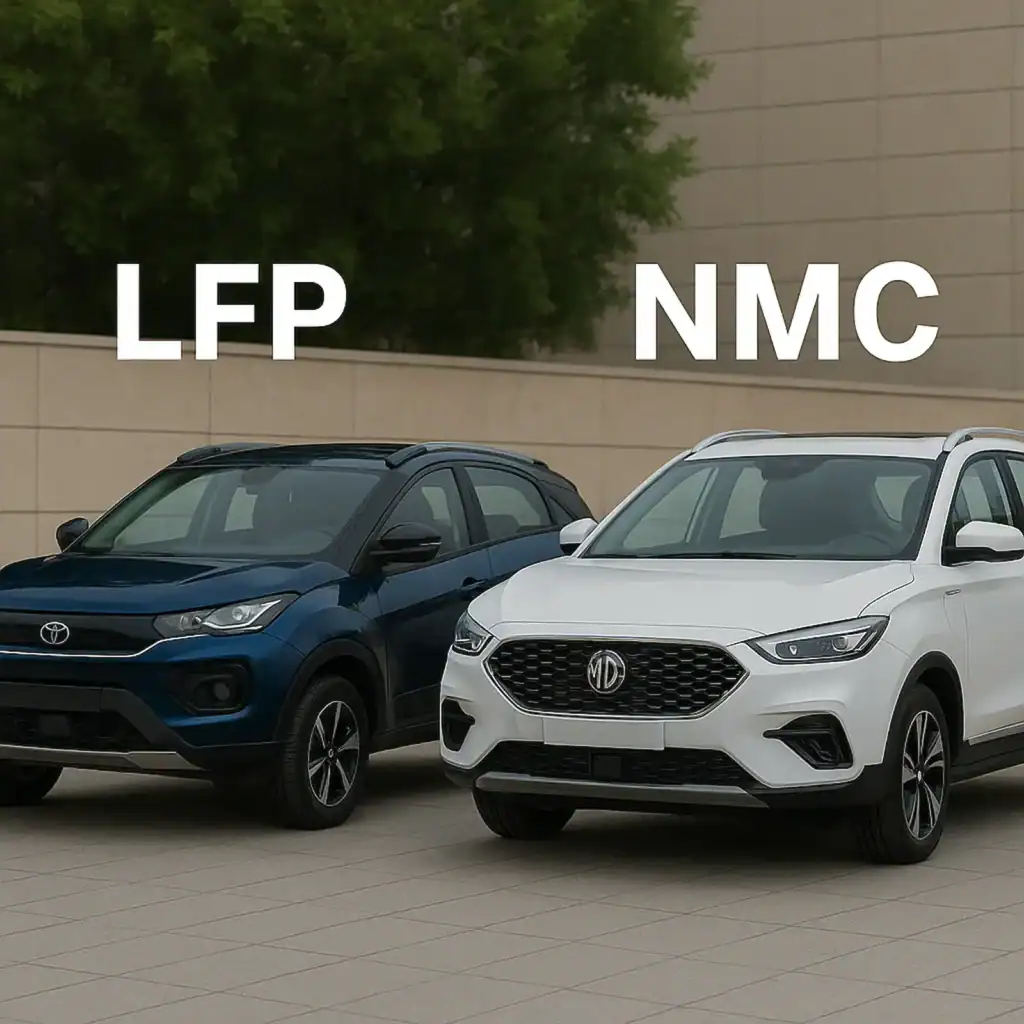
- Cars with LFP batteries:
- Tata Nexon EV 45 Kwh
- MG ZS EV (2024 facelift in India)
- BYD Dolphin
- Cars with NMC batteries:
- Hyundai Kona EV
- Kia EV6
- BYD Atto 3
- Hyundai Creta Ev
🔥 Safety Consideration – Why LFP is Safer for India
India’s climate is challenging – 45°C summers, long traffic jams, and poor charging infrastructure.
- LFP is chemically stable and much safer.
- NMC has a higher chance of thermal runaway (fire hazard) if cooling systems fail.
- That’s why Tata Motors and BYD (two big EV players in India) prefer LFP in their mass-market EVs.
💰 Cost Factor
- LFP packs: Cheaper by 15–20%, making EVs more affordable.
- NMC packs: Costlier, mostly used in premium cars (₹30L+ segment).
For the ₹15–25 lakh EV market (Tata, MG, BYD Dolphin), LFP dominates.
> The Future of LFP vs NMC
- LFP Technology Upgrades:
- New innovations like Blade Battery (BYD) and Cell-to-Pack design increase energy density.
- LFP cars are now reaching 400–500 km range, closing the gap with NMC.
- NMC Development:
- Premium EVs will continue with NMC for performance and luxury markets.
- With solid-state batteries coming after 2028, NMC may slowly fade in mass markets.
❓ Frequently Asked Questions (FAQs)
Q1. Which battery lasts longer – LFP or NMC?
👉 LFP lasts 10–12 years, NMC lasts 6–8 years.
Q2. Does LFP give less range than NMC?
👉 Yes, but new LFP designs are improving range.
Q3. Which battery is safer for Indian highways?
👉 LFP is safer in hot regions; NMC is fine for highways if thermal management is good.
Q4. Can LFP EVs be fast-charged?
👉 Yes, but not as fast as NMC. Still, it’s safe and better for battery health.
Q5. Which one should I buy in India?
👉
- City driving + hot climate = LFP
- Long highway trips + cold climate = NMC
*You can easily do long road trips with LFP batteries as well — I have personally covered multiple states across India in my LFP-powered EV without any issues.
🔑 Final Verdict
- Choose LFP if you:
✅ Drive mainly in cities or short highways
✅ Live in hot climates
✅ Want safer, longer-lasting, and affordable EV ownership - Choose NMC if you:
✅ Take frequent long highway drives
✅ Live in cold regions
✅ Want maximum range & premium performance
👉 For 70% of Indian buyers, LFP is the more practical choice in 2025.
Nepal Road Trip Experience in an EV
Have a question about going electric?
Ask real EV owners in the Harsh Explorer community — no sign-up needed.
Join the community →